The Future Advantage
Is Not Using AI.
It Is Demonstrating
Judgement While Using It.
The First Practical Guide To Applying Decision Clarity Architecture (DCA)
Follow DECODA on LinkedIn for launch announcements, practical insights and future resources.
FOLLOW DECODA ON LINKEDIN- Think More Clearly
- Challenge Assumptions With Confidence
- Use AI Intelligently And Responsibly
- Make Decisions You Can Confidently Stand Behind
- Strengthen Decision Integrity In Every Decision
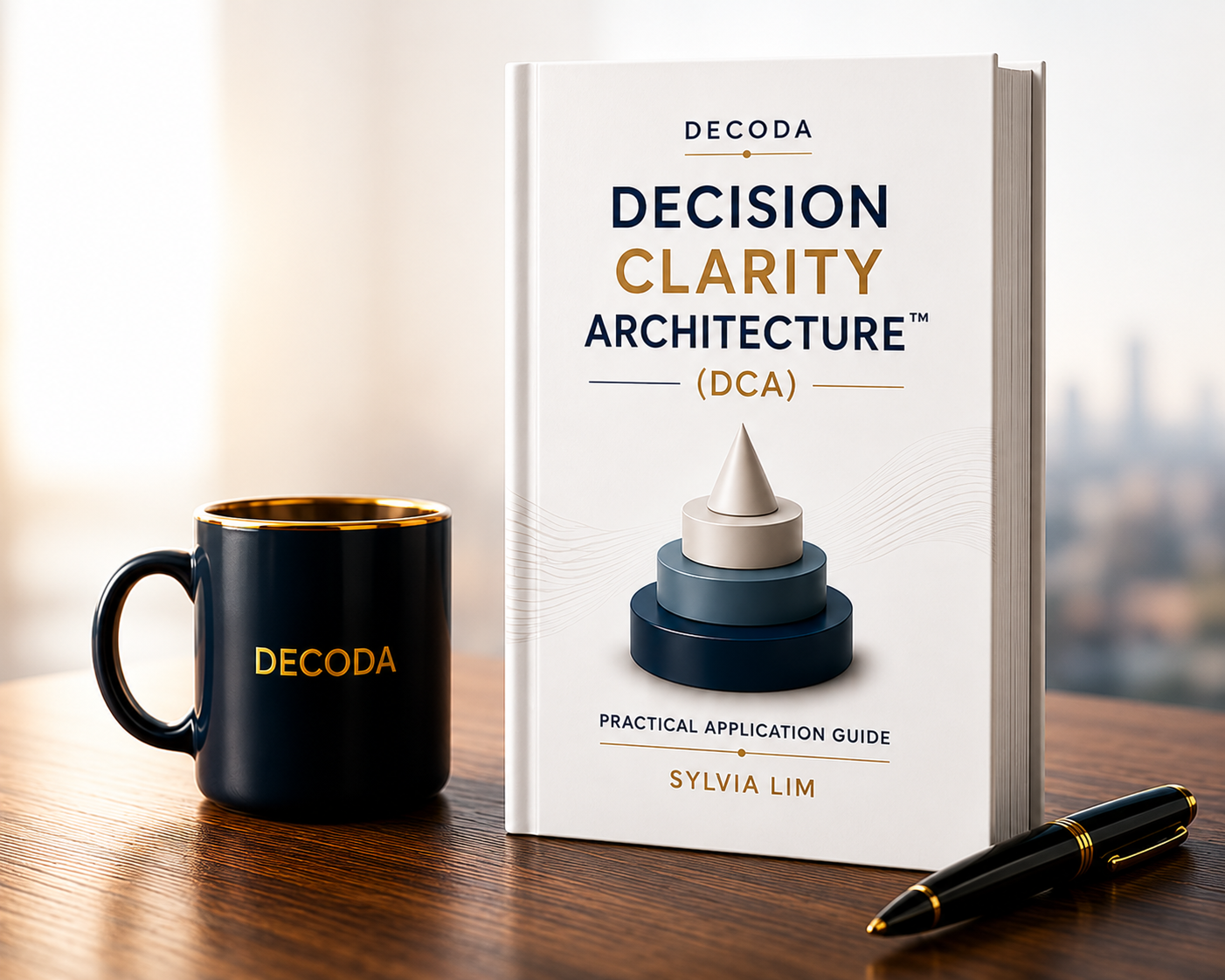
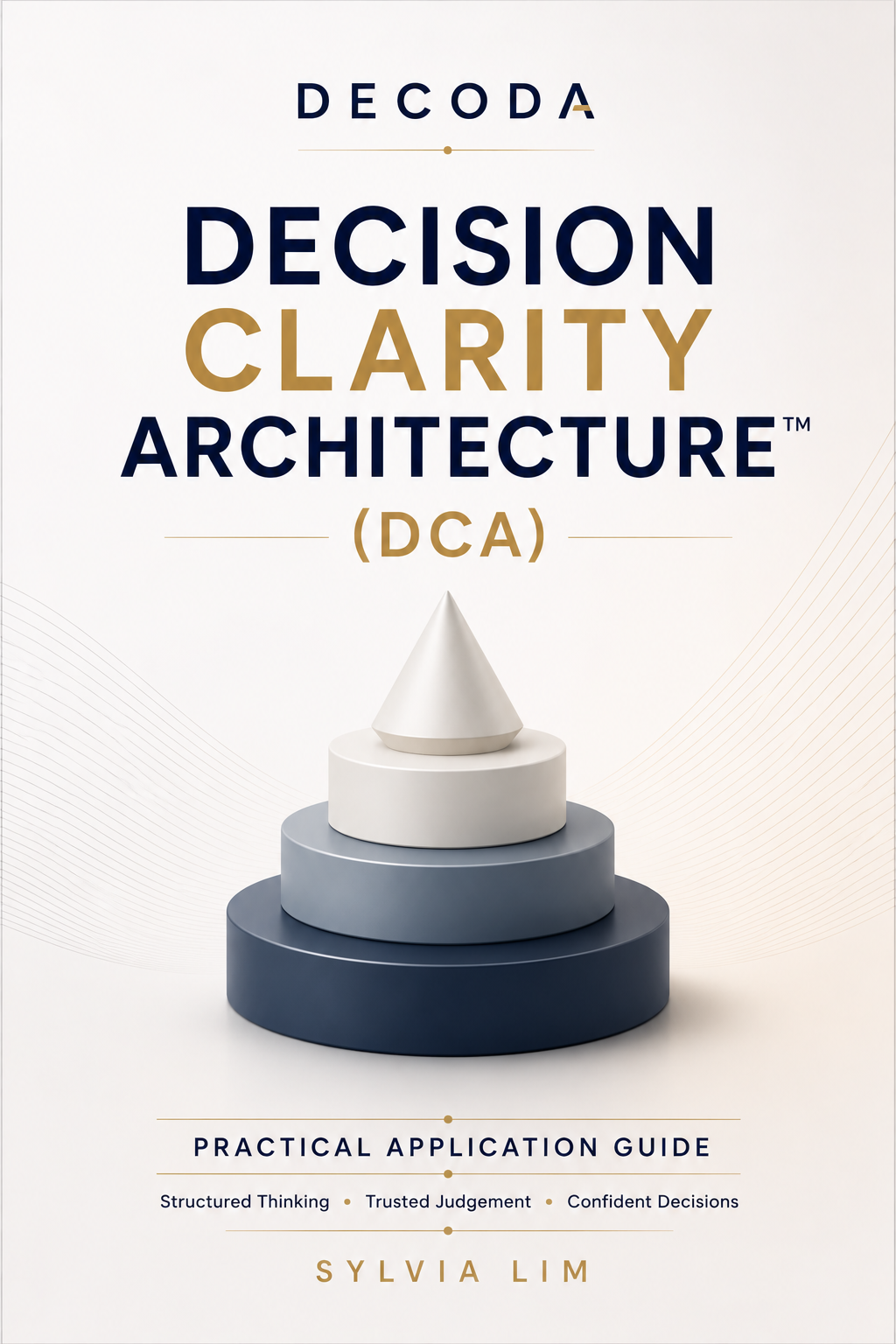
DECODA DCA PRACTICAL APPLICATION GUIDE
Many professionals are highly skilled in their technical disciplines but have never received formal training in how to evaluate the quality of a decision.
As AI-generated recommendations become increasingly common, the ability to explain, challenge and defend important decisions may become a key differentiator in professional credibility and performance.
The DCA Practical Application Guide provides a practical approach to strengthening judgement and improving decision quality in both professional and personal decisions.
- Understand the 12 elements that influence decision quality
- Apply DCA using a practical step-by-step process
- See how DCA works through real-world examples
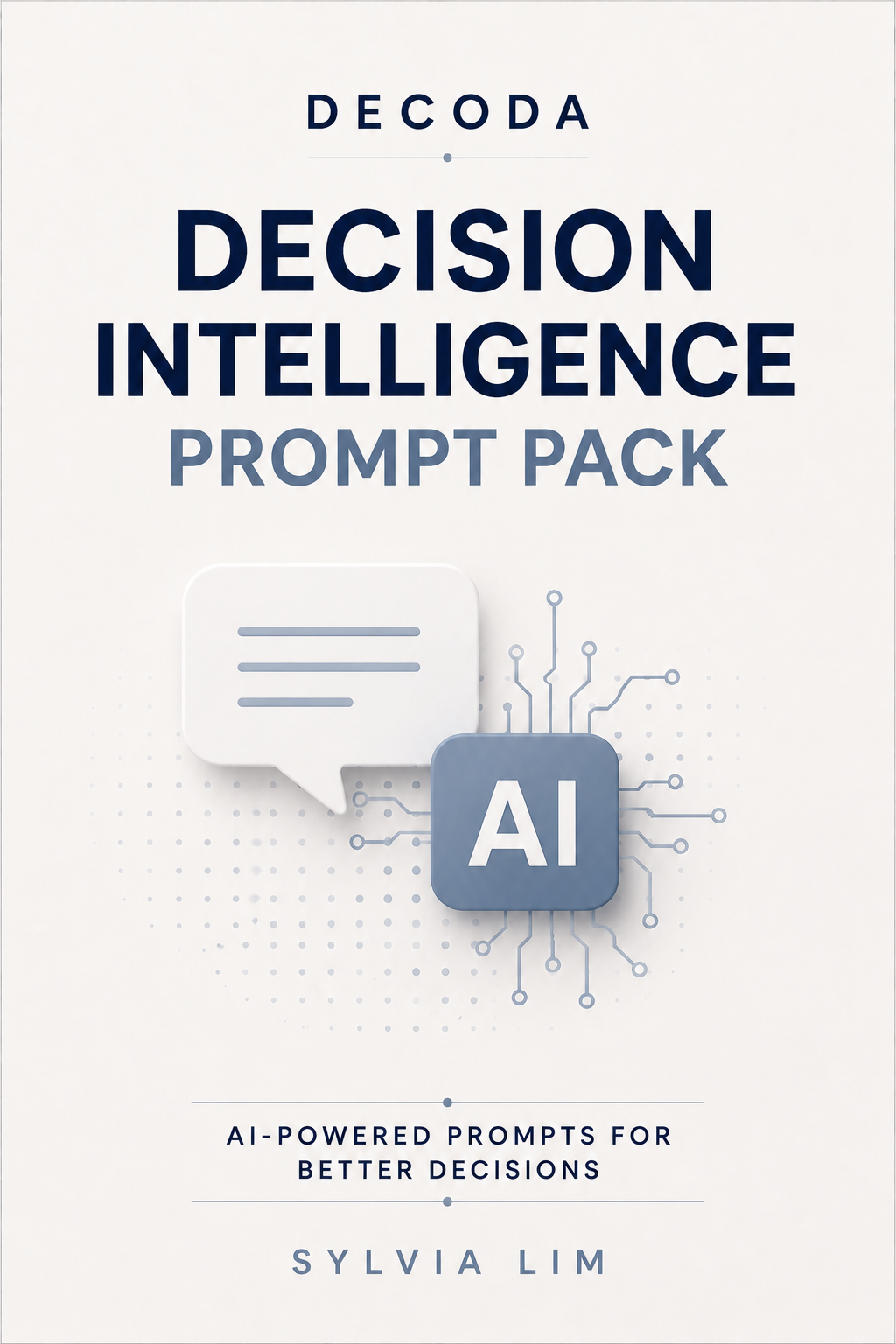
DECODA DECISION INTELLIGENCE PROMPT PACK
Most professionals use AI to generate answers. Far fewer know how to use AI to challenge assumptions, uncover blind spots and strengthen the quality of their thinking.
Without a structured approach, AI can unintentionally reinforce existing assumptions, overlook important risks and create a false sense of confidence.
This Decision Intelligence Prompt Pack helps you use AI more effectively as a thinking partner rather than simply an answer generator. It includes the DECODA Decision Review Accelerator, a practical prompt that helps you generate tailored decision review questions in minutes, even when you are unsure where to start.
- DECODA Decision Review Accelerator prompt
- Surface hidden assumptions
- Identify potential blind spots
- Explore alternative perspectives
- Stress-test important decisions
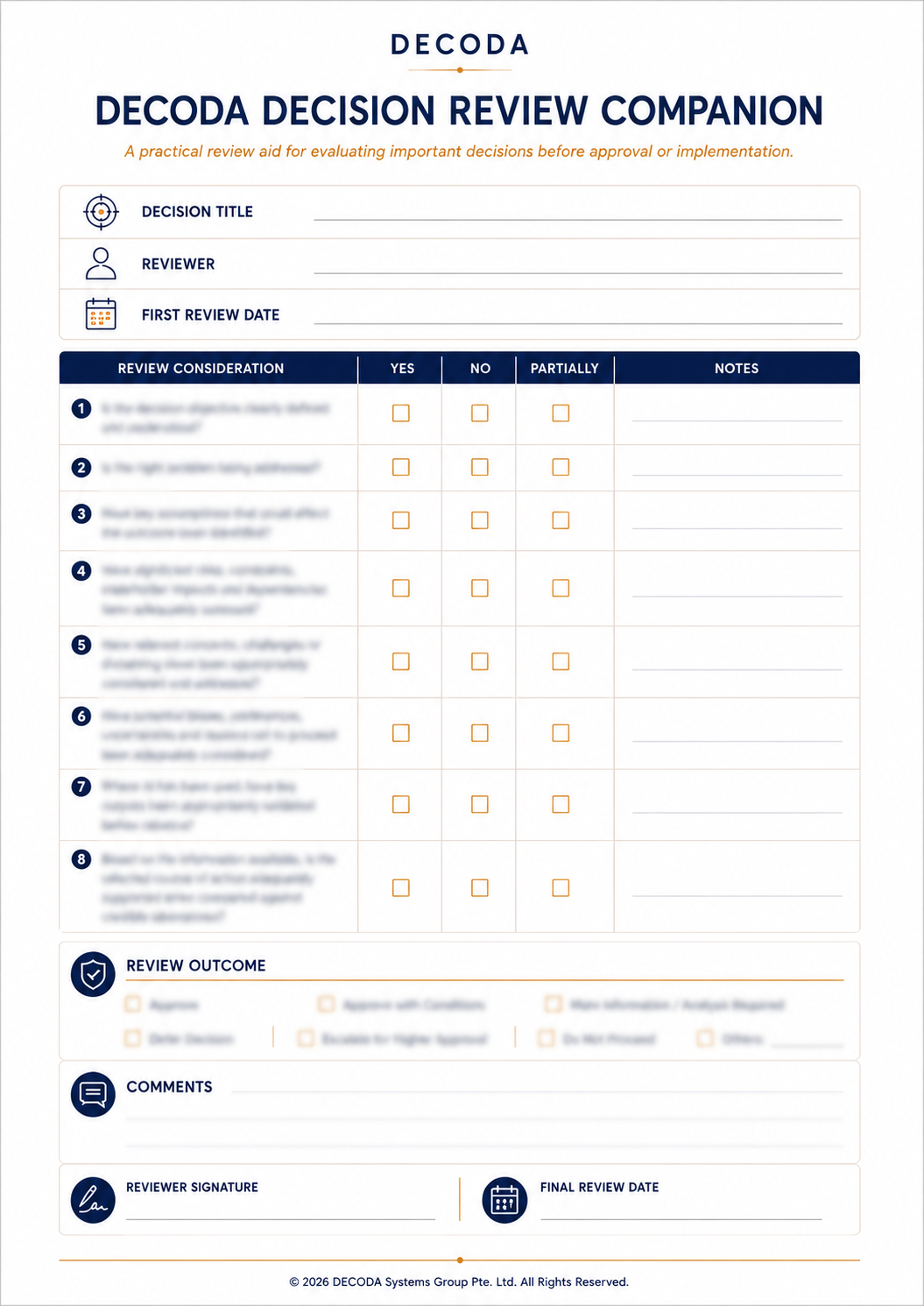
DECODA Decision Review Companion
Many recommendations appear sound until they are challenged by a manager, stakeholder, client or reviewer.
By that stage, important assumptions, risks or vulnerabilities may already have been overlooked.
The ability to identify weaknesses before others do can significantly improve the quality, credibility and defensibility of important decisions.
This companion provides a practical review process that can be applied before recommendations are presented, approved or implemented.
- Structure decision discussions
- Identify potential vulnerabilities
- Review recommendations more objectively